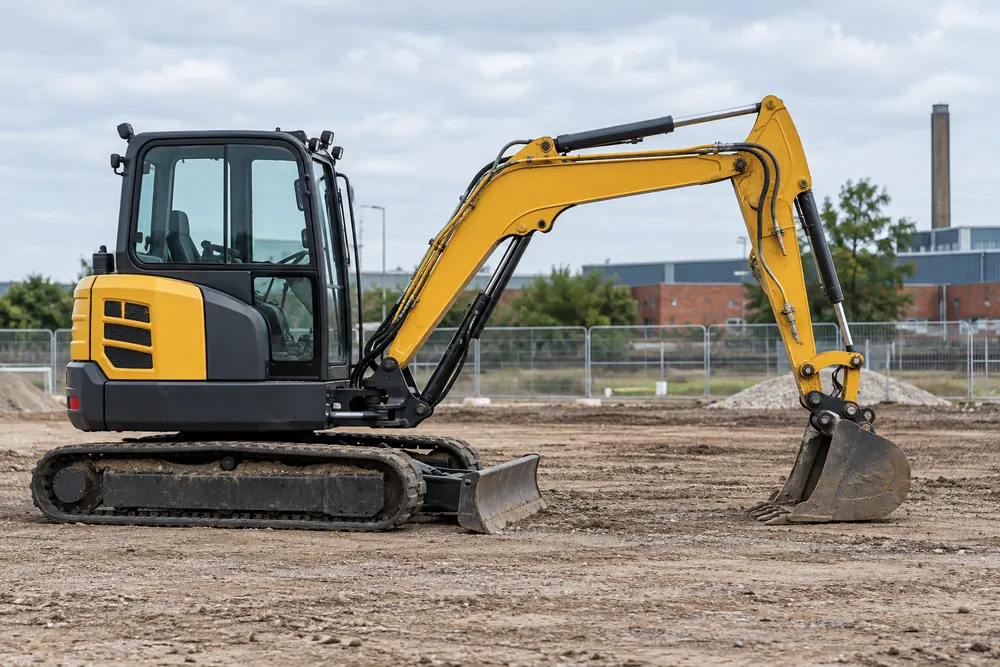
Equipment For The Task
Digger hire covers compact machines for restricted access and larger excavators for more demanding earthmoving. A contractor opening a service trench has different priorities from a team preparing a loading bay or forming a commercial extension foundation.
Start with the excavation dimensions and the material. Depth alone does not tell the full story, since reach, bucket width, loading height and space to position the machine all affect the choice. Explain whether material will stay on site or be loaded for removal.
We take enquiries for mini diggers and 360 excavators for business projects. Provide the work area dimensions, anticipated ground and any access survey information. Machine size, attachments and supply arrangements are confirmed against the actual requirement rather than inferred from a broad description.
Choosing The Specification
Measure the narrowest part of the access route, including corners and temporary obstructions. Consider track width, cab height and the room needed for the upper structure to rotate. A compact tail arrangement still needs a safe working envelope.
Buckets should suit the excavation rather than simply the largest capacity available. A narrow drainage bucket, grading bucket and breaker perform different jobs. Ask what is included and whether a change of attachment needs additional checks or operator familiarisation.
Think about the excavator and dumper as a pair. Loading height, bucket size and the dumper’s safe capacity must work together. Keep the loading position level and give the operator a clear view of the agreed exclusion area.
Safety And Site Responsibilities
The Provision and Use of Work Equipment Regulations 1998 (PUWER) govern suitability, condition and trained use. HSE guidance also highlights excavator movement, visibility and quick-hitch risks, so check the attachment locking procedure before work starts.
Before disturbing ground, establish the location of buried services using plans, locating equipment and safe digging methods. A scan alone is not permission to excavate without further controls. Follow the project’s safe system of work and stop when unexpected services or conditions are found.
If an excavator is used to lift loads, the lifting operation needs a separate assessment and suitable machine configuration. The Lifting Operations and Lifting Equipment Regulations 1998 (LOLER) can apply. Do not assume a digging attachment or improvised connection is acceptable for lifting.
Your Hire, Step By Step
Send the excavation dimensions, access limits, start date and site postcode. Include the loading position and whether the excavator will work beside occupied buildings, public routes or other contractors.
Review the proposed machine and attachments against the method of work. Confirm the delivery vehicle can reach the unloading point and that a responsible person will receive the machine. Ask for the operating instructions and relevant inspection information.
At handover, record existing damage and verify the bucket connection with a competent operator. Carry out daily checks, maintain the exclusion area and report defects promptly. Stop work if ground conditions change or the machine cannot operate within the agreed safe limits.
Equipment Rates And Transport Charges
Digger hire costs vary with machine size, hire period, attachments and transport. A breaker or specialist attachment can alter both the charge and the machine specification, so request it at the start rather than adding it after delivery.
Before reserving a digger for your Bristol excavation, check refuelling charges, cleaning costs and liability for damage. Ask what happens if groundworks are delayed, how extensions are agreed and when the machine is treated as off-hire. Spoil removal and excavation design are separate requirements unless explicitly included in the agreement.
Prepare For The Excavation
Set aside a safe place for excavated material before the machine arrives. The stockpile location affects the loading cycle and should be considered alongside excavation support and access for other trades.
If spoil is leaving the site, coordinate the receiving vehicle with the work sequence. Explain any material handling constraints in the hire brief so the proposed digger can be assessed in the context of the whole operation.
Digger Hire Questions
What Size Digger Do I Need?
Digger size depends on access, digging depth, reach and the material being excavated. Give the narrowest gate width, work area and loading height as well as trench dimensions. A smaller excavator can solve an access problem, but it may take longer or be unable to handle the required attachment or lifting task.
Can A Digger Lift Materials?
A digger can lift materials only when its configuration, rated capacity and the planned operation are suitable. Lifting requires appropriate planning, compatible accessories and relevant examination records where applicable. Tell the supplier about the proposed load and radius before hiring, and have a competent person confirm the lifting arrangements for your site.