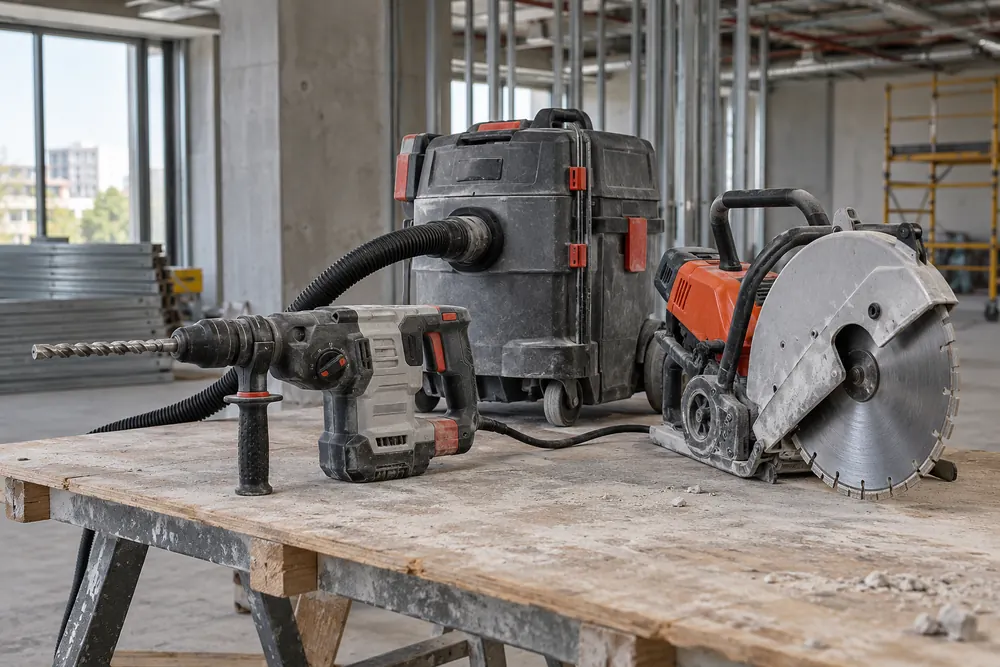
Equipment For The Task
A concrete floor opening, a shop refurbishment and a school maintenance shutdown need different tools, even when the work looks similar on a schedule. Start with the material, the required finish and the space available rather than a preferred model.
For drilling, explain the hole diameter, depth and substrate. For breaking, describe the thickness and reinforcement you expect to encounter. For cutting, identify the material and whether a straight, controlled edge is needed.
We take enquiries for breakers, drills, saws, dust extraction and other trade equipment. Supply, accessories and collection arrangements are confirmed in the quotation. A request is not a stock reservation, so include your intended start date and any acceptable alternatives.
Choosing The Specification
Power supply is an early decision. Confirm the site supply, socket type and cable route before choosing electric equipment, and ask whether transformers or leads are included. Battery tools need compatible batteries, charging arrangements and enough capacity for the working day.
Choose the consumable with the machine. A blade, bit or abrasive must suit the material and the equipment specification. Tell us if your own consumables will be used, since compatibility and wear charges need agreement before the hire starts.
For occupied commercial premises, describe working hours, noise restrictions and the route through the building. An extraction unit may take up valuable floor space. Check how equipment and materials will pass through controlled doors without disrupting staff or visitors.
Safety And Site Responsibilities
Tool hire does not remove the employer’s duties under the Provision and Use of Work Equipment Regulations 1998 (PUWER). Equipment must suit the task, be maintained and be used by people with appropriate training and instructions.
Cutting and drilling masonry can create hazardous dust. The Control of Substances Hazardous to Health Regulations 2002 (COSHH) require suitable exposure controls, which may include on-tool extraction or water suppression, with respiratory protection where the assessment requires it.
Hand-held breakers and drills also need an exposure assessment under the Control of Vibration at Work Regulations 2005. Select lower-vibration methods where practical and plan actual trigger time. Gloves alone do not control vibration exposure.
Your Hire, Step By Step
Describe the task and material, then list any constraints such as available power, extraction or permitted working hours. We use those details to clarify the tool type and accessories to quote.
Before accepting, check the hire dates, delivery or collection, consumables, cleaning terms and damage arrangements. Ask for the operating instructions and the checks expected before use.
At handover, inspect guards, cables and accessories. Stop using equipment if a defect appears, isolate it safely and contact the supplying firm. At return, record which accessories are included so missing items can be resolved promptly.
Equipment Rates And Transport Charges
Tool hire costs depend on the equipment class, hire length, accessories and transport arrangements. Cutting consumables, excess wear, fuel or cleaning may be separate, so ask for the whole expected charge rather than comparing a daily rate alone.
A short hire can become expensive if the task is delayed by an unavailable power supply or unfinished preparation. Agree when charging starts and ends, what happens over non-working days and how an extension is authorised. Keep the return reference with your site records.
Plan The Complete Tool Package
Keep a tool list alongside the work sequence. Note which tasks can share a machine and which will run at the same time, since one drill may become a bottleneck across several work areas.
Before dispatch, check storage, power and the location for consumables. Include extension leads, chargers, extraction hoses and guards in the handover inventory where supplied. A tool package is easier to manage when the receiving team knows what should arrive and what must go back.
Tool Hire Questions
Which Tools Can I Request?
Tool hire requests can cover drilling, breaking, cutting, surface preparation and general trade tasks. Describe the material and intended result instead of choosing solely by tool size. The quotation should identify the machine, attachments and consumables, along with any extraction, power or charging equipment needed to carry out the task.
Is Dust Extraction Included?
Dust extraction is included only when it is expressly listed in the agreed hire package. Explain the material and work method so the correct controls can be discussed. Check the extractor classification, compatible tool connections and filters with the supplier, then confirm the complete arrangement in your site risk assessment.